
The Rise of a Store as a Media Channel


For decades, stores were seen as the final step in the journey.
A place where products were stocked.Displayed, and eventually purchased.
Marketing happened everywhere else.
On television. On billboards. Online.
The store was simply where demand converted into sales.
But that definition is starting to change.
Quietly, but significantly.
The Shift No One Is Talking About Enough
Today, stores are no longer just distribution channels.
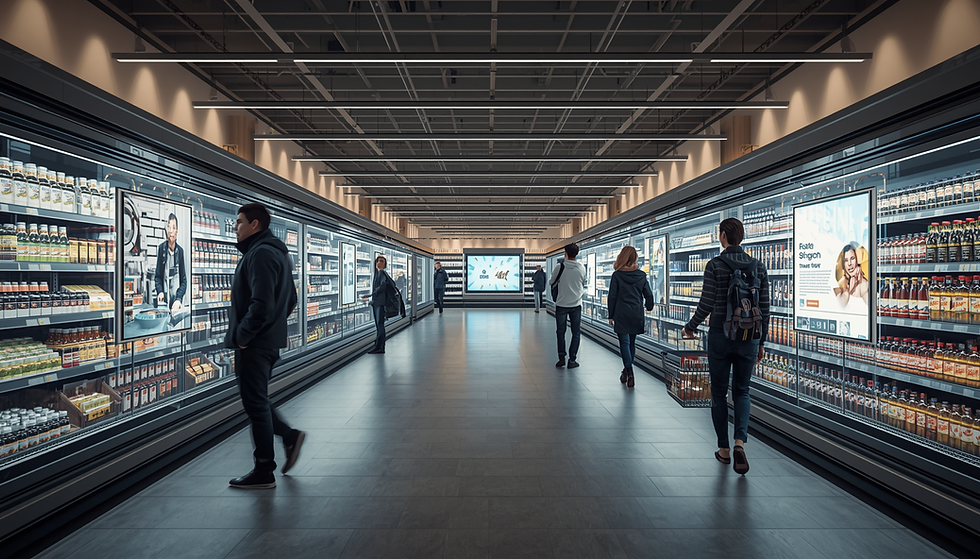
They are becoming media environments.
Spaces where brands can communicate, influence, and engage with shoppers in real time.
Think about the modern retail experience.
Shoppers walk through aisles filled with products, choices, and stimuli.They are already in a buying mindset.They are close to making a decision.
And increasingly, they are also being exposed to content inside the store itself.
Screens. Audio. Digital displays.Contextual messaging.
This is not just merchandising anymore.
This is media.
The Most Valuable Moment in Marketing
Most advertising happens before a shopper reaches the store.
It builds awareness.Creates preference.Shapes perception.
But it still operates at a distance from the actual purchase.
Inside the store, something different happens.
The gap between influence and action disappears.
A shopper can see a message and act on it within seconds.
This makes in-store environments uniquely powerful.
Unlike traditional media channels, they operate at the point of decision.
Attention Looks Different Inside a Store
In most media environments, attention is fragmented.
People scroll.Skip.Ignore.
But inside a store, attention behaves differently.
The shopper is physically present.Engaged in a task.Actively evaluating choices.
This creates a rare kind of attention.
Intent-driven attention.
When a shopper looks at a shelf, they are not passively consuming content.
They are trying to decide.
And any message that appears in that moment becomes part of that decision process.
Retail Is Becoming Measurable Media
One of the reasons digital advertising scaled so quickly was measurement.
Impressions.Clicks.Conversions.
Retail environments are now starting to offer similar capabilities.
With the rise of technologies like computer vision, POS integration, and real-time analytics, brands can begin to understand:
how many shoppers were exposed to a message
what products they engaged with
and in some cases, how messaging influenced sales
This is turning stores into something they were never designed to be.
A measurable media channel.
From Shelf Space to Mind Space
Traditionally, brands competed for shelf space.
Better placement meant better visibility.
But as stores evolve, the competition is expanding.
It is no longer just about physical space.
It is about mental space.
Which brand captures attention.Which message stands out.Which moment influences the decision.
Screens, audio, and in-store media are becoming tools to win that battle.
Why This Matters Now
For marketers, this shift changes a fundamental assumption.
Stores are no longer just endpoints in the funnel.
They are active participants in it.
A place where:
awareness can be reinforced
consideration can be influenced
and decisions can be shaped
All within a few seconds.
The question is no longer whether in-store media works.
The real question is:
Why isn’t it already a core part of every media plan?
The Opportunity Ahead
As retail continues to evolve, the lines between media and commerce are starting to blur.
Stores are becoming environments where:
Content meets context.Attention meets intent.And media meets purchase.
For brands, this opens up a powerful opportunity.
Not just to reach shoppers.
But to influence them at the exact moment it matters most.
References
Deloitte. The Future of Retail Media Networks.
McKinsey & Company. Retail Media: The Next Big Advertising Channel.
NielsenIQ. In-Store Shopper Behavior and Purchase Influence.
IAB. Retail Media Networks Playbook.


Comments