
The Role of Sound in Retail Environments: The Invisible Influence Shaping Shopper Decisions

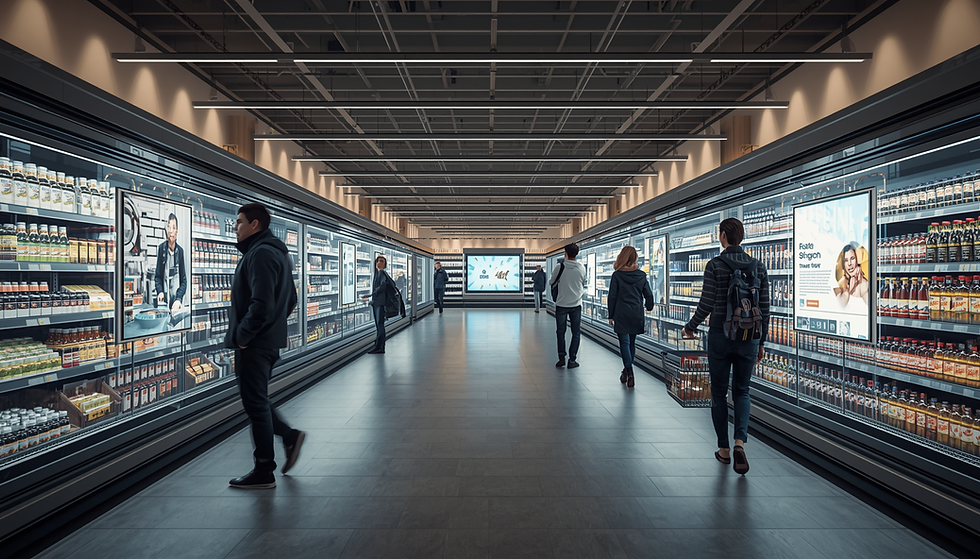
Walk into a supermarket, and you are surrounded by signals competing for attention. Product packaging calls out from the shelf. Promotions flash from screens. Store layouts guide movement. But there is another influence at work, often overlooked, yet incredibly powerful: sound.
Sound shapes how people feel, what they notice, and in many cases, what they buy.
For decades, retailers have used music to influence shopping behavior. The tempo of background music can affect how quickly shoppers move through aisles. Familiar sounds can create comfort. Unexpected sounds can spark curiosity. But the role of audio in retail environments goes far beyond background ambience. It can be a strategic tool for brands.
Why Sound Matters in a Shopping Environment
Shopping is rarely a purely rational activity. It is driven by emotion, habit, memory, and sensory triggers.
Sound works because it engages these triggers instantly.
The sizzle of frying can make frozen snacks feel more appealing.The crack of a cold beverage opening can make thirst feel immediate.A familiar brand jingle can trigger recall in seconds.A well-timed audio cue in the right aisle can interrupt autopilot and bring attention to a product.
Unlike visual messaging, which requires a shopper to be looking in a specific direction, sound can reach people across an environment.
That makes it uniquely powerful inside stores.
Sound Can Trigger Appetite, Curiosity and Recall
One of the strongest advantages of audio is its ability to influence multiple stages of shopper decision-making.
Appetite: Sensory sound cues linked to food and beverage can stimulate craving and increase product consideration.
Curiosity: Unexpected or contextual audio messages can break routine shopping behavior and make shoppers pay attention.
Recall: Audio has a strong link to memory. A repeated sonic cue, voice signature or branded sound can improve recognition long after the shopping trip ends.
For brands, this creates an opportunity not just to advertise, but to create sensory association.
The Opportunity for In-Store Audio Advertising
This is where retail media gets interesting.
If digital screens have created a visual layer of communication inside stores, audio can add another layer that complements it.
Imagine a frozen foods brand pairing on-screen creative with the sound of food sizzling.
Imagine a beverage brand using a subtle pouring sound and a short branded cue near the drinks aisle.
Imagine promotions triggered through aisle-level audio moments when shoppers are closest to purchase.
This is not about turning stores into noisy spaces. It is about using sound with relevance, timing and restraint.
When done well, audio does not interrupt the shopping experience. It becomes part of it.
The Future of Retail Media May Be Multi-Sensory
Retail media is evolving beyond screens.
The next phase may not be just about reaching shoppers visually, but engaging them through multiple senses at the point of purchase.
Because influence in retail is not always about who shouts the loudest.
Sometimes it is about who creates the strongest sensory memory.
And sound can do exactly that.
A Question for Brands
Many brands invest heavily in visual storytelling.
But how many are thinking about sonic presence inside stores?
Have you experimented with audio as part of your retail media strategy?
Because the aisle may be listening.


Comments